

Article: How to Choose an Engagement Ring
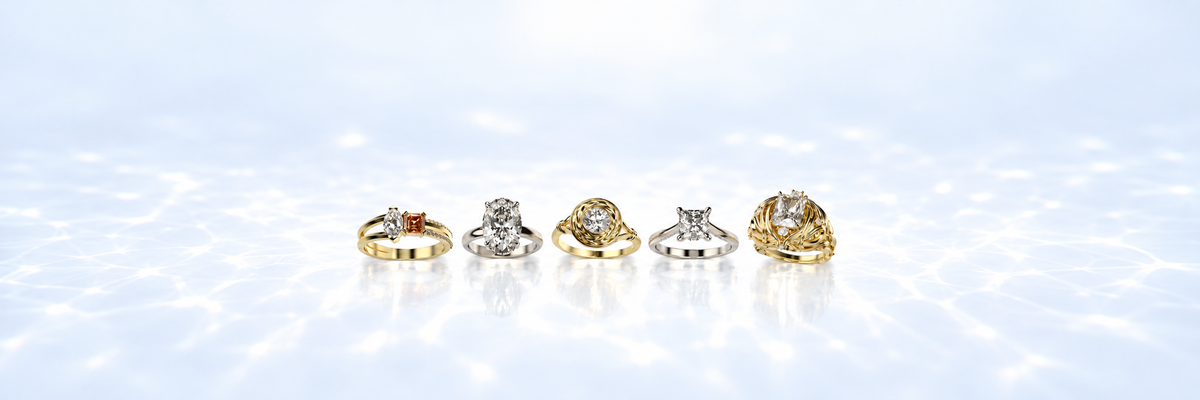
How to Choose an Engagement Ring
Choosing an engagement ring brings together several decisions: the stone, the style, the metal, the fit and the budget. Knowing where to begin can make the whole experience more enjoyable.
When I work with a couple, I help them make these decisions one at a time. You can arrive with a collection of reference images, a favourite diamond shape or simply a few questions. Here is what I recommend considering as you find your direction.
1. Start with a budget that feels comfortable
Decide what you would feel comfortable spending on the finished ring. Sharing that range early helps me suggest suitable materials and designs.
Think about which details matter most to you. You might prioritise the centre diamond, an intricate setting or a substantial gold band. Knowing your preferences helps us decide where to put the budget and which alternatives are worth exploring.
2. Notice the styles you keep coming back to
Look at the jewellery you already enjoy wearing. Do you prefer clean lines, delicate details or bold shapes? Are you drawn to symmetry, or do you like something more organic?
Save a few reference images and identify what you like about each one. It might be the outline of a marquise diamond, the softness of a curved band or the way a stone sits within its setting.
In my work, I often explore natural lines and sculptural forms. These can be subtle: a gentle curve or a carefully shaped claw can give a simple ring its own character.
If you are choosing for your partner, their existing jewellery and preferences are useful starting points.
3. Understand the stone you are choosing
For diamonds, the 4 Cs provide a useful starting point:
-
Cut: How the diamond’s proportions and facets affect its interaction with light.
-
Colour: The presence or absence of colour in a white diamond.
-
Clarity: The internal features and surface characteristics assessed during grading.
-
Carat: The diamond’s weight. Its shape and measurements also affect how large it looks.
These details help you compare stones. I also recommend looking at clear videos of the actual diamonds you are considering, paying attention to each stone’s outline, brightness and overall appearance alongside the grading information.
We can explore both natural and lab-grown diamonds. If you would like to understand how laboratory-grown diamonds are produced, our article about diamond seeds explains the process.
Colour opens up other possibilities, including sapphires, emeralds and coloured diamonds. Each gemstone has its own care requirements. Discuss everyday wear and care before choosing your stone.

4. Consider the metal and setting together
The metal contributes to the whole design. Yellow gold, rose gold, white gold and platinum can each give the same stone a different visual character.
Ask about maintenance as well as colour. Rhodium-plated white gold, for example, may need replating as the finish wears over time.
When reviewing a setting, I consider how high the stone sits, how the band feels between the fingers and how a future wedding band might fit alongside it.
A delicate appearance still needs appropriate support. The ring’s durability depends on its construction, the quality of the setting and its finishing, as well as the overall design.
Tell me about your daily routine, especially if you work with your hands or regularly wear gloves. Those details help guide practical design choices.

5. Get the fit right
I recommend having the intended finger measured by a jeweller using ring sizers. Discuss the width and profile of your chosen band during sizing so the fit is considered alongside the design.
If you are planning a surprise proposal, mention this early. We can discuss ways to estimate the size and whether the proposed design allows for adjustment later.
It is also worth thinking about how the engagement ring will feel when worn with a wedding band. Bring an existing band to the consultation if you would like the two to sit together.
6. Take part in the design process
At Anna Popovych Jewelry, your ideas and preferences guide the design. I develop up to four concepts to help you explore the possibilities before we refine the chosen direction.
Once we agree on a design, I create a digital 3D preview so you can review the ring from different angles and discuss refinements before production. A wax or resin try-on model is also available on request.
This is a good time to ask questions about proportions, setting height and how the ring will feel on your hand. If you have a proposal date in mind, share it at the beginning so we can discuss the time needed for design, stone selection and production.
You can read more about the experience in Why Choose a Custom Engagement Ring?
The right ring brings together the details you love with a fit and construction suited to everyday wear. My role is to help you understand the choices and feel comfortable with the decisions you make.

If you are ready to explore an idea, send us a message.
— Anna Popovych

